15 Open-Source Plugins You're Probably Sleeping On (And Shouldn't Be)
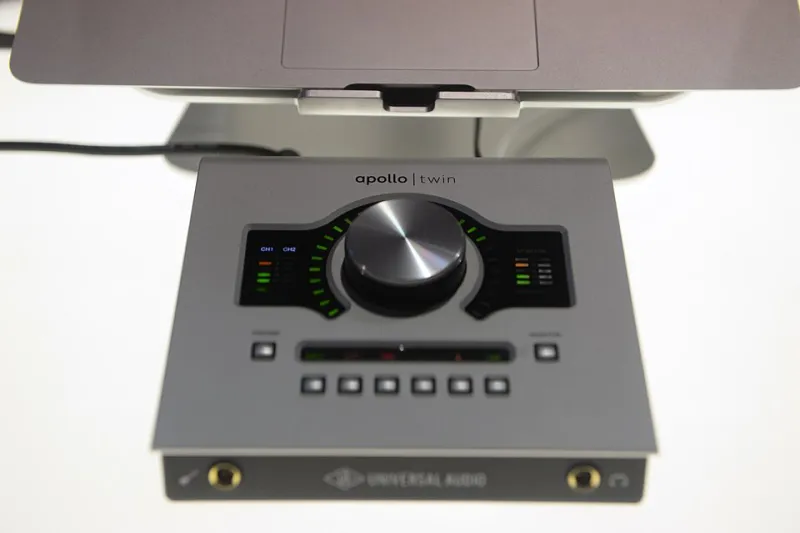
Photo: Brandon Daniel from USA, CC BY-SA 2.0, via Wikimedia Commons
There's a persistent myth in production circles — especially among engineers migrating from commercial DAW ecosystems — that free plugins are demo-quality placeholders you use until you can afford the real thing. That was maybe true in 2010. It is not true now.
The open-source audio development community has been quietly building some remarkable tools, and on Linux especially, native LV2 and LADSPA plugins run with zero overhead penalty. No Wine bridge, no CPU tax, no licensing headaches. Just processing.
We've put together 15 plugins that deserve a permanent spot in your chain. Some you might have heard of; others are flying well under the radar. All of them are free, open-source, and actively maintained or stable enough to trust in a professional context.
Compression
1. LSP Compressor Stereo
Competes with: Waves CLA-76, FabFilter Pro-C 2
The LSP (Linux Studio Plugins) compressor suite is the kind of thing that makes you wonder why anyone charges $200 for a compressor. The stereo version offers feed-forward and feed-backward modes, an accurate gain reduction meter, and a sidechain EQ that rivals what you'd find in mid-tier paid options. For bus compression on a mix, it's become a go-to in our test sessions. The knee control is particularly musical.
Tip: Try the feed-backward mode on drum buses for a more vintage, program-dependent feel.
2. ZaMaximX2
Competes with: Waves L2, iZotope Ozone Maximizer (basic mode)
This dual-band lookahead limiter from the ZamAudio suite is lean, efficient, and surprisingly transparent at moderate limiting depths. It won't replace Pro-L 2 for aggressive loudness work, but for gentle mastering limiting or peak control on individual stems, it handles itself professionally. CPU usage is minimal.
3. Calf Vintage Compressor
Competes with: UAD LA-2A emulations
Controversial in the community because of some known DSP accuracy debates, but hear us out: for character-adding compression where you want something to feel like it's doing something, the Calf Vintage Compressor delivers. It's not a forensic tool. It's a vibe tool. Use it accordingly.
4. MDA Dynamics
Competes with: Basic multiband compressors in the $50–80 range
Old, simple, and genuinely useful. The MDA plugin suite has been around forever, but the Dynamics processor holds up for utility compression tasks. Great as a transparent utility compressor on dialogue, room mics, or any source where you just need even-handed gain riding without color.
EQ
5. x42 EQ (by Robin Gareus)
Competes with: FabFilter Pro-Q 3 (parametric accuracy)
Robin Gareus is one of the most respected developers in the Linux audio world, and the x42 EQ reflects that pedigree. Phase-accurate, zero-latency capable, and visually clean. The frequency response display is precise enough to trust for mastering decisions. This is the EQ we reach for first on almost every Linux session.
Tip: Use the linear phase mode for mastering bus work to avoid low-end phase smear.
6. LSP Parametric EQ x32
Competes with: Waves Q10, Equilibrium
Thirty-two bands of fully parametric EQ. Yes, really. You'll probably never use all 32, but having them available for complex notch filtering on a restoration job or surgical room correction is genuinely useful. The analyzer integration is solid. This is a workhorse.
7. TDR Nova (Community LV2 Port)
Competes with: FabFilter Pro-Q 3 (dynamic EQ mode)
The dynamic EQ functionality here — where bands compress or expand based on threshold crossings — is something most producers associate with expensive tools. The LV2 community port runs cleanly on Linux and the dynamic EQ behavior is musical and controllable. One of the most impressive free tools on this list.
Reverb
8. DragonFly Room Reverb
Competes with: Valhalla Room (short, natural reverbs)
DragonFly consistently surprises people. The Room algorithm in particular has a natural, unsmeared quality that works beautifully on acoustic instruments and vocals. It's not trying to be a massive hall verb — it's a realistic, intimate room simulator, and it nails that. The Early/Late mix control gives you useful options for pre-delay shaping.
9. Freeverb3 VST
Competes with: Lexicon-style algorithmic reverbs
A deeper, more configurable reverb engine than its name might suggest. The modulation controls help prevent the metallic, repetitive artifacts you get from lesser algorithmic reverbs. Good for pads, strings, and ambient production work.
10. Convolution Reverb via IR.lv2
Competes with: Altiverb, Waves IR-1
Convolution reverb quality is almost entirely about the impulse response library, not the convolution engine itself. IR.lv2 is a clean, low-artifact LV2 convolution loader. Pair it with free IR libraries from sites like OpenAIR (which includes real spaces like York Minster and the Tyndall Bruce Monument) and you've got a world-class reverb setup for zero dollars.
Saturation & Harmonic Distortion
11. LSP Saturator Stereo
Competes with: Soundtoys Decapitator (moderate settings)
The LSP Saturator gives you multiple saturation curve modes — hard clip, soft clip, exponential, and more — with a clean dry/wet blend and an oversampling option to keep aliasing under control. For adding harmonic density to a mix bus or individual tracks, it's versatile and transparent enough to use at subtle levels without muddying the source.
12. Wolf Shaper
Competes with: Custom waveshaping tools, iZotope Trash 2 (basic modes)
This one's for the experimenters. Wolf Shaper lets you draw custom waveshaping curves with a spline editor, giving you granular control over exactly how distortion is applied. It's unusual, it's powerful, and it rewards time spent with it. Great for electronic production and sound design.
Utility & Analysis
13. x42 Meters Suite
Competes with: Nugen VisLM, TC Electronic LoudnessToolbox
Loudness metering that's actually accurate. The x42 meters include EBU R128, true-peak detection, and K-system metering — everything you need for streaming platform compliance. In our testing, the true-peak readings matched Youlean Loudness Meter closely enough to trust for delivery. This is non-negotiable in a professional Linux setup.
14. Sonic Annotator + Vamp Plugins
Competes with: iZotope RX (analysis features)
This is a less conventional entry — Sonic Annotator is a batch audio analysis tool that pairs with Vamp plugins for feature extraction (pitch, tempo, spectral analysis). It won't replace a full restoration suite, but for understanding what's happening inside a recording before you start processing, it's a surprisingly capable analytical toolkit.
15. Calf Analyzer
Competes with: SPAN (basic spectrum analysis)
Simple, functional, and always available. The Calf spectrum analyzer doesn't have SPAN's polish, but it loads fast, runs light, and gives you a reliable frequency readout when you just need a quick visual reference. Good to have in the toolbox as a lightweight alternative.
The Bigger Picture
Look, nobody's saying you should throw out your Fabfilter bundle or abandon iZotope overnight. Paid tools have earned their reputations, and there are tasks — deep restoration work, certain reverb algorithms, very specific emulations — where they're still ahead.
But the gap has narrowed considerably, and on Linux, native open-source plugins have a specific performance advantage that their paid bridged counterparts simply can't match. Building a hybrid workflow — native LV2 plugins for the heavy processing, a handful of trusted paid tools via yabridge for the finishing touches — is how most experienced Linux producers are actually working right now.
Start with the x42 suite and LSP plugins. Get comfortable with them. You might be surprised how far they take you before you reach for anything else.
