Outside the Box: How Linux Producers Are Building Killer Signal Chains Without Ever Opening a DAW
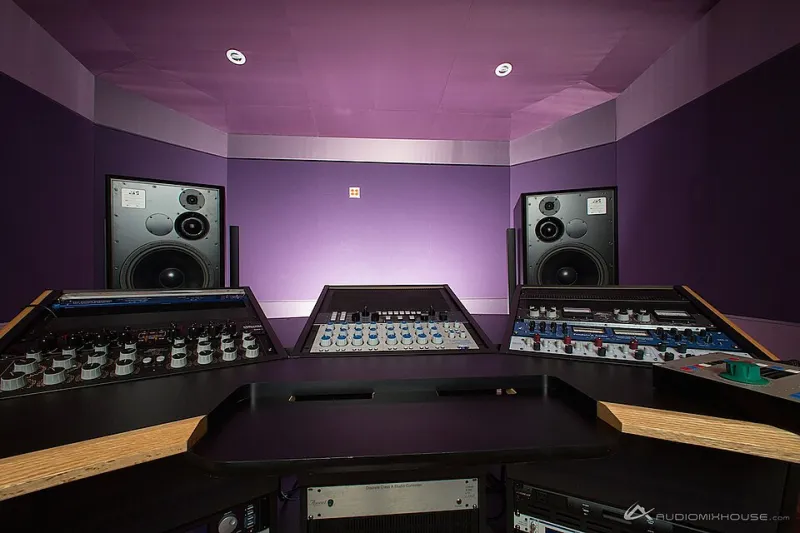
Photo: Audio Mix House from United States, CC BY 2.0, via Wikimedia Commons
If you spend enough time in Linux audio forums, you start noticing a pattern. Certain producers — the ones with polished mixes and suspiciously low CPU usage — aren't doing things the way everyone else is. They're not fighting with plugin windows inside Ardour or Bitwig. They're running entire mixing and mastering chains through standalone hosts, stitched together with JACK, operating completely outside any traditional DAW environment.
It sounds niche. It sounds complicated. And most mainstream audio content completely ignores it. But once you see it in action, it's hard to go back.
What This Workflow Actually Looks Like
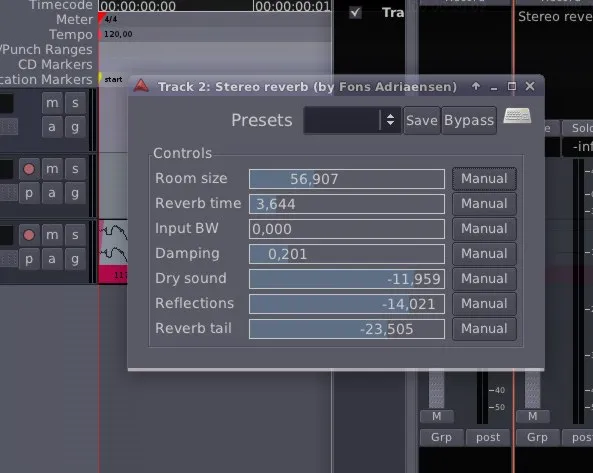
The basic idea is straightforward even if the setup takes some getting used to. Instead of loading your plugins into a DAW's mixer or effects chain, you route audio through a standalone plugin host — something like Carla, Pedalboard2, or even a purpose-configured instance of Zita-njbridge — and let JACK handle all the signal routing between applications.
Your DAW handles sequencing and arrangement. Everything else — EQ, compression, saturation, limiting — lives in a separate, independently running plugin chain that JACK feeds audio through in real time. The DAW doesn't care what's happening downstream. It just sends audio out. The plugin chain does its thing. You hear the result.
Producer Marcus Webb, based out of Atlanta, has been running this setup for about two years now. "I got tired of my DAW crashing because of one bad plugin," he says. "When your whole session goes down because a compressor misbehaved, that's a workflow problem. Running the mix chain outside the DAW means if something breaks, I fix it without touching the session."
Why the DAW Becomes a Bottleneck
Here's the thing most tutorials won't tell you: DAWs are phenomenal sequencers, but they're often mediocre plugin hosts. Their internal routing is constrained by design decisions made for the average user. You get a fixed signal flow, limited parallel routing options, and a CPU scheduler that has to balance MIDI, audio, automation, and plugin processing all at once.
On Linux, that constraint hits harder because most producers are already working around compatibility layers, WINE bridges, or native-only plugin libraries. Adding complex plugin chains inside a DAW that's already juggling yabridge instances and JACK connections is a recipe for xruns and headaches.
By offloading the plugin chain to a dedicated host, you're giving those plugins their own CPU headroom. JACK's scheduling becomes more predictable. Your DAW runs leaner because it's only doing what it's actually good at.
San Francisco-based mastering engineer Priya Nolan put it bluntly: "My DAW is basically a playback engine at this point. All the real processing happens in Carla. I have a mastering chain I've been refining for two years, and I can drop any session into it without changing a single setting. That kind of reproducibility doesn't exist inside a DAW."
Real-Time Plugin Swapping Changes Everything
One of the underrated advantages of this approach is what happens when you want to try a different plugin mid-session. Inside a DAW, swapping a plugin usually means stopping playback, removing the old one, loading the new one, reconfiguring routing, and hoping your session doesn't hiccup. It's a momentum killer.
With a standalone host running outside the DAW, you can swap plugins while audio is flowing. JACK keeps the signal path intact. You pull one compressor, drop in another, and hear the difference immediately — no transport stops, no session reloads. For producers who work iteratively, testing different tools on the same source material, this is genuinely transformative.
Marco Delgado, who produces hip-hop and R&B out of Chicago, describes it as "finally having a modular workflow on software." He uses Carla to run a chain of LV2 plugins on his main bus, and he'll swap saturation and limiting plugins in real time while his DAW loops a section. "It's closer to working on hardware," he says. "You're not editing a session. You're just listening and adjusting."
Building a Reproducible Chain
One of the most practical benefits nobody talks about is session portability. When your plugin chain lives inside your DAW project, you're tied to that project file. Different session, different chain. You're rebuilding from scratch every time, or copying settings manually.
A standalone chain saved in Carla or a similar host is a separate file. It's portable. You can load it under any session, any DAW, any project. Your mastering chain from last month works on this month's mix without any extra steps.
For producers who work on multiple projects simultaneously — which is most working producers — this is a significant time saver. Priya Nolan keeps a small library of chain presets: one for mixing vocals, one for bus glue, one for her mastering pass. "I load the chain, I load the session, I'm working in under a minute," she says. "That's not something you can do when everything is buried inside a project file."
The JACK Learning Curve Is Real (But Worth It)
Let's be honest: JACK routing isn't plug-and-play, especially if you're coming from a Windows or Mac background where everything connects automatically. You'll spend time learning how to patch connections in QjackCtl or Carla's patchbay. You'll probably misconfigure something the first few times.
But the Linux audio community has gotten pretty good at documenting this stuff. The KXStudio documentation, the LinuxMusicians forum, and a handful of YouTube channels have made the learning curve significantly more approachable than it was five years ago. Most producers who commit to it report that within a few sessions, the routing becomes second nature.
The payoff is a level of flexibility that simply doesn't exist in locked-down DAW environments. You're not working inside someone else's signal flow decisions. You're building your own.
A Distinctly Linux Way to Work
What strikes you most when you talk to producers running these setups is how Linux-native the whole philosophy feels. This isn't a workaround or a compromise. It's a workflow that emerged specifically because Linux gives you the low-level audio access to make it possible. JACK's inter-application routing, the modular plugin host ecosystem, the ability to run multiple audio applications simultaneously with shared real-time priority — none of that exists in the same way on other platforms.
Mainstream audio content keeps framing Linux as the platform where you have to give things up. But producers like Marcus, Priya, and Marco are doing things on Linux that their Pro Tools and Ableton counterparts genuinely cannot do. That's worth paying attention to.
If you've been treating your DAW as the center of your entire signal universe, it might be time to rethink the architecture. On Linux, the tools to build something better are already there. You just have to be willing to route outside the box.