Bridging the Gap: What's Actually Blocking Windows VSTs on Linux (And the Real Fixes Developers Are Building)
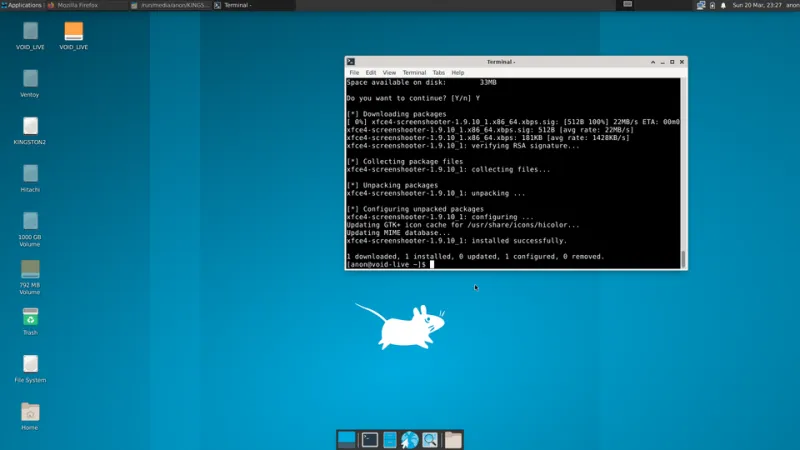
Photo: The Void Linux Community, GPL, via Wikimedia Commons
Every Linux audio producer has been there. You boot up your freshly tuned, low-latency system, fire up Carla or yabridge, and try to load that one plugin — maybe it's Serum, maybe it's a beloved hardware emulation from a boutique developer — only to watch it crash, render silent, or spit out a wall of Wine error logs. The compatibility layer dream is real, but so are its limits. So let's talk about what's actually going on under the hood, and more importantly, what's coming next.
Why Wine Isn't Just "Windows on Linux"
A lot of people assume Wine works like a virtual machine — a clean Windows environment sitting on top of Linux. It doesn't. Wine is a compatibility layer that translates Windows API calls into their Linux equivalents in real time. That sounds elegant until you realize how deeply Windows audio plugins are woven into Microsoft's ecosystem.
The two biggest culprits? COM threading models and GUI frameworks. Most VST3 plugins (and plenty of VST2 holdouts) rely on Microsoft's Component Object Model for inter-process communication. COM has very specific rules about which threads can call which objects, and Wine's implementation has historically been incomplete in ways that cause plugins to deadlock or silently fail. Meanwhile, many modern plugins use DirectX-accelerated GUIs or custom OpenGL contexts that behave differently under Wine's graphics translation layer.
Then there's the audio driver problem. Windows plugins expect ASIO or WASAPI at the bottom of the stack. Linux uses ALSA, PipeWire, or JACK. Bridging those isn't just a renaming exercise — the buffer negotiation, clock synchronization, and latency reporting mechanisms are architecturally different. Getting a plugin that was designed to talk to ASIO to behave correctly through Wine talking to JACK is, frankly, a small miracle when it works.
The yabridge Story: Progress That's Actually Real
If you haven't been following yabridge, you're missing the most practically significant development in this space over the last few years. Robin Brons' project takes a different approach than older tools like LinVST: it runs each Windows plugin in its own Wine process and communicates with the Linux host via shared memory and Unix sockets. The result is better isolation (one crash doesn't take down your whole session), more accurate plugin behavior, and support for VST2, VST3, and CLAP bridging.
The current yabridge 5.x releases have meaningfully improved VST3 compatibility, with better COM apartment threading support and more robust GUI handling. Does it work for everything? No. But the list of plugins that run correctly — including some major commercial titles — has grown substantially. The project's GitHub issue tracker is worth bookmarking; it's one of the more honest public records of what works, what doesn't, and why.
Proton's Role: Gaming Tech Meets Audio Production
Valve's Proton project — the compatibility layer powering Steam Deck's ability to run Windows games on Linux — has generated a lot of excitement in audio circles, and some of that excitement is justified. Proton incorporates a heavily patched version of Wine plus additional components like DXVK (DirectX to Vulkan translation) and VKD3D. Some of these improvements trickle back upstream and benefit audio workflows.
However, Proton is optimized for games, not DAWs. Games have different latency tolerances, different threading patterns, and different audio requirements than professional audio software. Using Proton for VST bridging is possible in some configurations, but you're fighting against design assumptions at almost every level. It's a useful source of Wine patches, not a turnkey audio solution.
The Real Blockers Nobody Talks About: Plugin Protection
Here's the uncomfortable technical reality that often gets glossed over in forum discussions: a significant chunk of plugin incompatibility has nothing to do with Wine's capabilities at all. License managers and copy protection schemes — iLok, PACE, and various custom implementations — frequently use low-level Windows kernel drivers that have no Linux equivalent and can't be meaningfully translated by Wine. Even if the audio engine of a plugin would run fine, the protection layer refuses to initialize.
This is a genuine dead end for many commercial titles, and it's not something that yabridge, Proton tweaks, or any amount of kernel patching can fully solve. It requires either the plugin developer to build a native Linux version or to change their protection scheme. Neither happens quickly.
What's Actually Coming: PipeWire and the 2025 Outlook
The most structurally important development for Linux audio right now isn't a compatibility layer — it's PipeWire. As PipeWire matures and becomes the default audio and video server on major distributions, it creates a more unified, lower-latency foundation that makes bridging Windows audio APIs more tractable. PipeWire's JACK compatibility layer and its improving ALSA emulation mean that the "bottom of the stack" problem is getting cleaner.
On the bridging side, the CLAP plugin format — backed by u-he and others — is worth watching. Several developers who've resisted native Linux VST ports have expressed openness to native CLAP releases, which would sidestep the bridging problem entirely for those titles.
The honest answer for 2025 is this: yabridge will keep getting better, PipeWire will keep maturing, and a handful of important commercial developers will release native Linux builds. But if your workflow depends on a specific iLok-protected Windows plugin with a custom GUI framework, you should plan around that limitation rather than waiting for it to disappear. The ecosystem is moving — just not uniformly, and not always in the direction the hype suggests.
What Producers Should Actually Do Right Now
Stop treating compatibility layers as a binary pass/fail. Check the yabridge compatibility wiki for your specific plugins before building a session around them. Test in a throwaway project first. And seriously consider whether a native Linux alternative — even an open-source one — might actually serve your workflow better than a bridged Windows plugin that half-works.
The gap is narrowing. But it's still a gap, and knowing exactly where the edges are is how you build sessions that don't fall apart at 2am before a deadline.